

 +86 10 59796858
Overview of Bucyrus 495HR Mining Excavator and Maintenance
The Bucyrus 495HR mining excavator, as a key large piece of equipment in open-pit mining, undertakes heavy excavation and loading tasks. Its long-term high-intensity operation makes the equipment components prone to wear, deformation, and other issues, which not only affects the working efficiency of the equipment but may also pose safety risks. Therefore, precise maintenance of this equipment is crucial. The laser tracker, as an advanced measuring device, plays an irreplaceable role in the maintenance of the Bucyrus 495HR mining excavator due to its high precision and large measurement range.

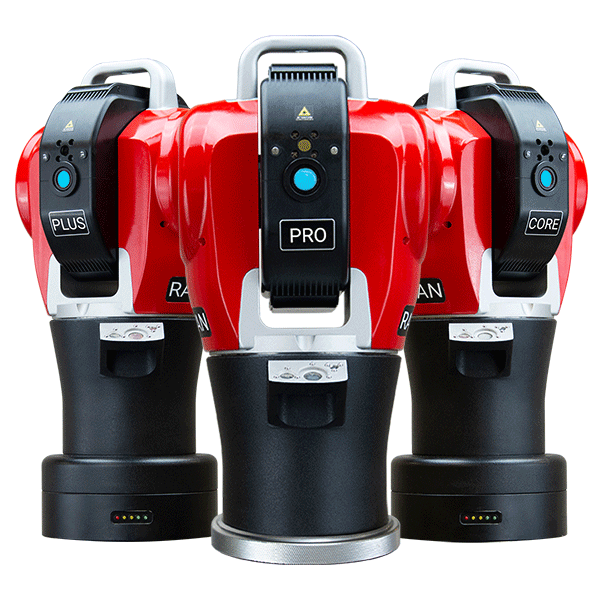
Figure 1: API Brand Series Laser Trackers (Models from left to right: Radian Plus / Radian Pro / Radian Core / iLT)
The working principle and characteristics of laser trackers
The laser tracker is based on a laser interferometric distance measurement system, combined with an angle measurement device, capable of real-time measurement of the three-dimensional coordinates of target points. The laser beam it emits can accurately track target reflectors, allowing for quick and precise acquisition of measurement data even in complex industrial environments. It features high measurement accuracy (up to the micrometer level), a large measurement range (typically reaching dozens or even hundreds of meters), and good portability, making it very suitable for on-site inspection and measurement work of large mining equipment.
Introduction to the API Series Laser Trackers
The Radian Pro laser tracker is the flagship model in the API brand's Radian series, integrating both IFM (Interferometric Laser) and ADM (Absolute Laser) dual lasers. Its measurement data is traceable, ensuring high-precision and high-standard measurements. The measurement rate of the Radian Pro laser tracker can reach 1000Hz, performing effortlessly in both static and dynamic modes, easily meeting detection requirements. In addition, it features an extensive measurement range, capable of high-precision measurements on workpieces or measurement targets within a range of 160 meters.
During measurement, the tracker emits a laser to the target sphere of the built-in prism and establishes tracking. Once the target sphere is aligned with the position to be measured, the tracker can manually or automatically collect spatial data for that target location. After data collection, it will be synchronously transmitted to the measurement software on the laptop for subsequent analysis.
In addition to the flagship model Radian Pro, the API brand also offers various models of laser trackers to meet the measurement needs of more fields and application scenarios:
Radian Plus and Radian Core provide high-precision measurements while achieving battery power and wireless data transmission, truly realizing completely wireless large-scale precision measurement;

Figure 2: Radian Plus laser tracker (left) and iLT laser tracker (right)
The newly launched iLT laser tracker further reduces the overall size of the laser tracker by 50% (compared to the Radian series) while enabling completely wireless measurement, with a total weight of only 4.9 kg, maximizing portability and fully meeting the needs of applications in outdoor, field, confined spaces, and multi-machine integration environments.

Figure 3: iLT laser tracker application site
Specific applications of laser trackers in various maintenance stages
1. Size detection of structural components
In the early stages of maintenance, it is necessary to measure the dimensions of structural components of the excavator, such as the track frame, boom, and dipper arm. Using the laser tracker, key dimensional parameters of these components, such as length, width, height, and hole diameter, are measured and compared with the standard dimensions in the design drawings to determine if there is any wear or deformation. For example, for the track frame, accurately measuring the position and size of its mounting holes ensures the accuracy of track installation, avoiding abnormal equipment movement due to improper track installation.
2. Equipment installation and calibration
After equipment assembly or component replacement, precise installation and calibration are required. The laser tracker can measure the coordinates of key positions such as the excavator's rotation center, boom hinge point, and dipper arm hinge point, ensuring the relative positional accuracy between components. Taking the installation of the boom as an example, the measurement data from the laser tracker is used to adjust the installation angle and position of the boom to meet design requirements, thereby ensuring the coordinated movement of all components during the excavator's operation, improving work efficiency and stability.
3. Detection of Geometric Tolerances for Key Components
For some key components of excavators, such as hydraulic cylinders and gearboxes, it is necessary to detect their geometric tolerances. A laser tracker can measure parameters such as cylindricity, flatness, and straightness. Taking the hydraulic cylinder as an example, by measuring the cylindricity of its cylinder barrel, we can determine whether the hydraulic cylinder has deformed after long-term use. If the deformation exceeds the allowable range, timely repairs or replacements should be made to ensure the normal working performance of the hydraulic cylinder.
4. Equipment Operating Status Monitoring
During the trial operation phase after maintenance, the laser tracker can also be used for monitoring the operating status of the equipment. By continuously measuring parameters such as displacement and vibration of key components during operation, the operating status of the equipment can be analyzed, and potential fault risks can be identified in a timely manner. For example, measuring the amount of sway of the rotating platform during its rotation; if the sway amount increases abnormally, it may indicate a problem with the slewing bearing, requiring further inspection and handling.

Figure 4: Measurement Site of This Case
Measurement Site and Analysis
In an open-pit coal mine, a Bucyrus 495HR mining excavator experienced a decrease in digging force and unstable operation after being used for a period of time. Maintenance personnel used a laser tracker to conduct a comprehensive inspection of the equipment. Measurements revealed that the hinge point position of the boom had shifted, causing a deviation in the motion trajectory of the boom during operation. Based on the measurement data from the laser tracker, the maintenance personnel adjusted and calibrated the boom hinge point, restoring it to the correct installation position. After the repairs, the excavator's digging force and operational stability returned to normal, effectively avoiding production losses due to equipment failure.

Figure 5: Measurement Site of This Case
Conclusion
The laser tracker demonstrated its advantages of high precision and efficiency throughout the maintenance process of the Bucyrus 495HR mining excavator, from structural component size detection to equipment installation calibration, and from geometric tolerance detection of key components to operating status monitoring. The application of the laser tracker can improve the quality and efficiency of maintenance for mining excavators, extend the service life of the equipment, ensure safe production and efficient operation in open-pit mines, and provide strong technical support for equipment maintenance in the mining industry.
相关新闻:
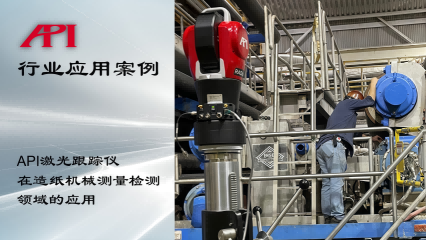
Application of API Laser Tracker in the Measurement and Detection Field of Papermaking Machinery
Detection Requirements of Papermaking Machinery In order to address issues such
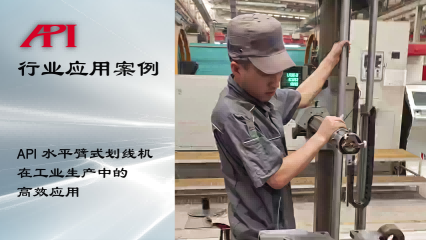
API Horizontal Arm Marking Machine Efficient Application in Industrial Production
About the Marking MachineThe marking machine is a measuring device commonly used
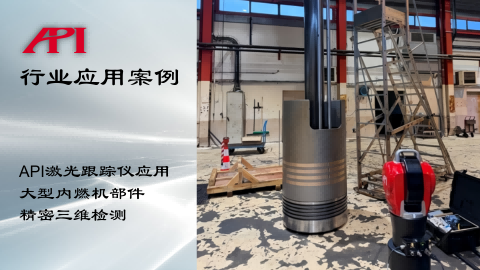
Precision 3D Inspection of Large Internal Combustion Engine Components
The Importance of 3D Inspection for Large Internal Combustion Engine ComponentsL
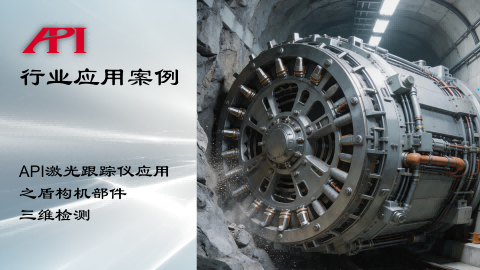
Application of API Laser Tracker in 3D Detection of Shield Machine Components
Importance of 3D Detection of Shield Machine ComponentsThe shield machine is the
Learn More:

激光跟踪仪靶球&测头
Maximize laser tracker productivity with hand held and 激光跟踪仪主动靶标.
Learn More /laser-tracker-targets
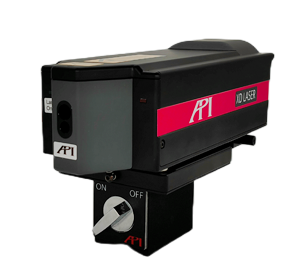
XD Laser CMM Calibration
The XD Laser is the only assessment system that can measure all 6 error parameters simultaneously in a single set-up
Learn More /xd-laser

API Reverse Engineering Service
Reverse engineering services include scan as-built parts to creation of a 3D digital point cloud and CAD Model.
Learn More /reverse-engineering/