

 +86 10 59796858
Forklift Lifting Frame and Inspection Requirements
The forklift lifting frame is an important core component in the construction of hydraulic and electric forklifts. Due to its long dimensions, narrow width, and the characteristics of welded parts that are prone to deformation, controlling the parallelism of the combined lifting frame is challenging. During operation, the lifting frame directly bears the load, which requires high standards for material selection, dimensional processing accuracy, welding technology, and installation positioning during the design process. Therefore, manufacturing and quality inspection are crucial in the production of forklifts. With the continuous improvement and iteration of handling equipment in China, and the trend towards larger, taller, more precise, and stable products, traditional methods relying on manual experience and bridge-type coordinate measuring machines are increasingly unable to meet the high precision and reliability requirements in the inspection of large lifting forklifts. Consequently, there is an urgent demand for high-precision dimensional inspection technology in large spaces.
To inspect product processing accuracy and whether assembly meets design requirements, measurement is an indispensable and important part of the production and assembly process. The electric forklift lifting frame has very high requirements for the parallelism of the guide rail positioning plane and the distance between planes. Additionally, welded parts often lead to product deformation after stress release, which poses significant challenges to measurement and assembly technology.
Traditional Inspection Methods
Currently, the measurement of forklift lifting frames mainly uses bridge-type coordinate measuring machines and large calipers for inspection. While bridge-type coordinate measuring machines can perform high-precision dimensional inspections, factors such as the large size of the product, its height, and the inability to adhere to the actual usage angles of the forklift have rendered them inadequate for the overall inspection of large and tall components. Large calipers are also unable to meet the limitations of measuring distances greater than 3 meters, and they cannot measure parallelism or positional accuracy. Moreover, measurements require multiple people to cooperate, and the accuracy of large calipers is highly dependent on measurement techniques and force application, making stable repeatability difficult to control and prone to deviations. This, to some extent, increases the loss of labor and time costs.

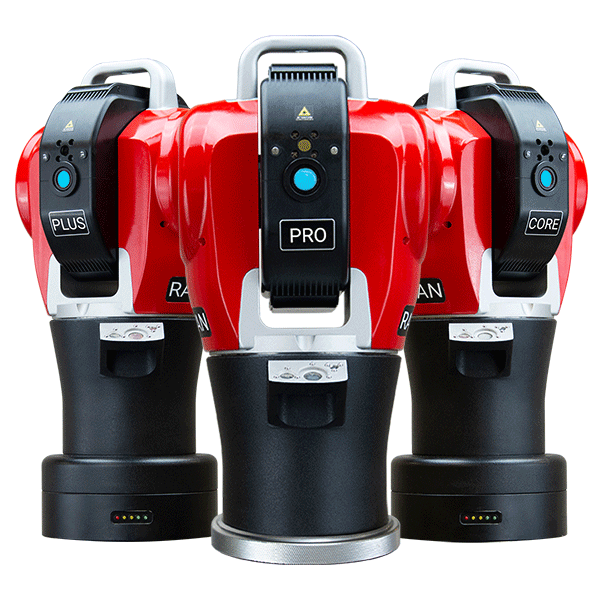
Figure 1: Radian Series Laser Trackers
Laser Tracker Measurement Methods
Forklift manufacturing companies are actively seeking and urgently need equipment that can quickly resolve issues related to the parallelism and stability monitoring of lifting frames. The Radian series laser trackers from the API brand provide targeted measurement technology for forklift manufacturers, enabling rapid detection and acquisition of inspection data for customer products. This allows for quick measurement of the parallelism of the forklift lifting frame, the flatness of the positioning plane, and monitoring of the lifting frame's sway. For the inspection of forklift lifting frames, API has enhanced customer product quality and stability through comprehensive application discussions and summaries by software and hardware engineers. Additionally, it provides more comprehensive assembly positioning guidance during the installation process and offers strong data support for monitoring the sway of finished lifting frames.

Figure 2: Schematic of the forklift and lift frame to be tested in this case
Detection of the forklift lift frame
For the detection of the forklift lift frame, there are mainly two aspects:
1. Detection of the parallelism of the lift frame, flatness of the positioning assembly surface, and distance;
2. Detection of straightness and the amount of top stability shaking during the lifting process of the lift frame.

Figure 3: Measurement and detection site for this case
Regarding the above two detections:
1. When detecting the parallelism of the frame and the flatness of the positioning assembly surface, it is only necessary to place the Radian laser tracker at a suitable position around the frame and turn on the system to measure. During measurement, the operator holds the tracking target ball (SMR) with a built-in prism, touches the position on the frame where data needs to be collected, and the laser emitted by the laser tracker will lock onto the center of the target ball at any time, tracking that point and obtaining real-time 3D position data for that point; the operator only needs to stabilize the target ball at the position to be tested (the time can be set), and the tracker will measure that position at a collection rate of 1000Hz and quickly transmit the data to the measurement software on the laptop for storage, for subsequent analysis. During data analysis, by selecting the corresponding point group in the measurement software, corresponding lines, surfaces, solids, etc. can be constructed, and key data reports such as parallelism, verticality, flatness, etc. can be automatically generated, thus achieving the purpose of detection.
2. For the detection of straightness and the amount of top stability shaking during the lifting process of the lift frame: ① A flat base can be fixed to the lift using suction, and continuous data points can be collected, followed by software processing for straightness and maximum distance deviation analysis of the top stability points. ② When dealing with larger amplitude movements, the ActiveTarget moving target can also be used in conjunction with the laser tracker to achieve continuous point measurement; the ActiveTarget moving target (see Figure 4), based on high-precision SMR, is equipped with a motor servo system, which can actively face and lock onto the laser tracker beam without manual intervention, ensuring that even in high-speed movement, the light will not be interrupted, thus guaranteeing high-quality continuous point collection operations.

Figure 4: ActiveTarget moving target
The advantages and features of the Radian series laser trackers
1. The Radian series laser tracker from the API brand is a representative tool in the field of precision measurement. Laser tracking measurement technology has been widely applied in high-end manufacturing across various industries and in academic research at scientific research institutions.
2. Among them, the Radian Pro model integrates IFM/ADM dual lasers, and all measurement data is traceable.
3. The Radian Plus/Core model laser tracker employs an absolute laser ranging system, featuring outstanding performance, stable operation, extreme portability, and ease of use. It is the perfect solution for large-scale precision measurement, representing the world's cutting-edge laser tracking measurement technology. It breaks through the traditional design concepts of trackers, integrating a controller, temperature compensation system, tilt sensor, and battery within a compact design that fully meets the requirements for high-quality measurement tasks in limited measurement spaces.
4. The Radian Plus/Core laser tracker integrates a built-in WiFi wireless data transmission system, greatly simplifying the installation process of the equipment and eliminating the troubles caused by wires and connections typically encountered during equipment installation.
In the field of forklift component and lift frame inspection, it can fully meet measurement needs and efficiently assist enterprises in implementing quality inspections.

Figure 5: API Company Headquarters Building
About API
The API brand was founded by Dr. Kam Lau in 1987 in Rockville, Maryland, USA. He is the inventor of the laser tracker and holds multiple patents for globally leading measurement technologies, making him a leader in the field of precision measurement technology. Since its establishment, API has been dedicated to the research and production of precision measurement instruments and high-performance sensors in the mechanical manufacturing field. Its products have been widely applied in advanced manufacturing sectors around the world and are at the forefront of high-precision standards in coordinate measurement and machine tool performance testing.
相关新闻:
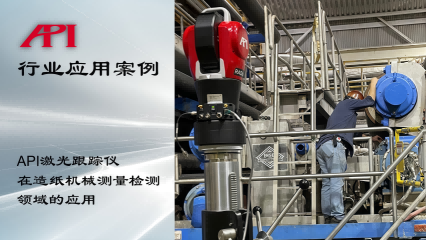
Application of API Laser Tracker in the Measurement and Detection Field of Papermaking Machinery
Detection Requirements of Papermaking Machinery In order to address issues such
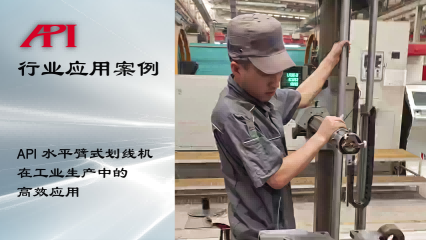
API Horizontal Arm Marking Machine Efficient Application in Industrial Production
About the Marking MachineThe marking machine is a measuring device commonly used
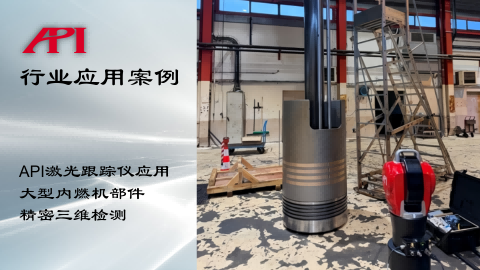
Precision 3D Inspection of Large Internal Combustion Engine Components
The Importance of 3D Inspection for Large Internal Combustion Engine ComponentsL
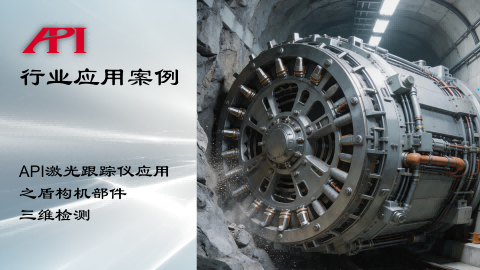
Application of API Laser Tracker in 3D Detection of Shield Machine Components
Importance of 3D Detection of Shield Machine ComponentsThe shield machine is the
Learn More:

激光跟踪仪靶球&测头
Maximize laser tracker productivity with hand held and 激光跟踪仪主动靶标.
Learn More /laser-tracker-targets
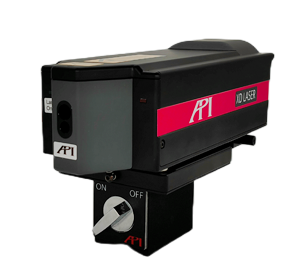
XD Laser CMM Calibration
The XD Laser is the only assessment system that can measure all 6 error parameters simultaneously in a single set-up
Learn More /xd-laser

API Reverse Engineering Service
Reverse engineering services include scan as-built parts to creation of a 3D digital point cloud and CAD Model.
Learn More /reverse-engineering/