

 +86 10 59796858
About Aerospace Composite Materials
Aerospace composite materials are primarily used in the manufacturing of aircraft structural components and spacecraft parts. They possess advantages such as lightweight, high strength, and corrosion resistance, which contribute to the further enhancement of aircraft and spacecraft performance. However, the manufacturing process of aerospace composites is relatively complex, requiring high standards and precision in management and control to ensure they perform as intended.
Importance of Composite Material Laying System Equipment Detection
As previously mentioned, precise laying control is necessary during the production of aerospace composites. Even minor discrepancies can affect the final performance of the components. Therefore, it is essential to ensure the operational accuracy of the composite material laying system equipment, which lays a solid foundation for subsequent manufacturing and usage steps. The precision of the laying system can be considered the cornerstone for ensuring the performance of the final product.
Detection Requirements
The composite material laying system in this case consists of two main components: the first is the mold carrying mechanism, which allows the mold workpiece to rotate while supporting the composite material to be laid; the second is a multi-axis industrial robot equipped with a guide rail, responsible for laying the composite material onto the mold workpiece.

Figure 1: Aerospace Composite Material Laying System in this Case
At the request of the client, the content of this measurement and detection is as follows:
Check the rotational accuracy of the base flange of the composite material laying system mold support mechanism, measuring at 45°/minute;
Check the repeat positioning accuracy of the multi-axis industrial robot.
After measuring and inspecting these two parts, we can understand and evaluate the operational accuracy of the two sets of components separately and in collaboration based on the measurement data, establishing data support for subsequent debugging.

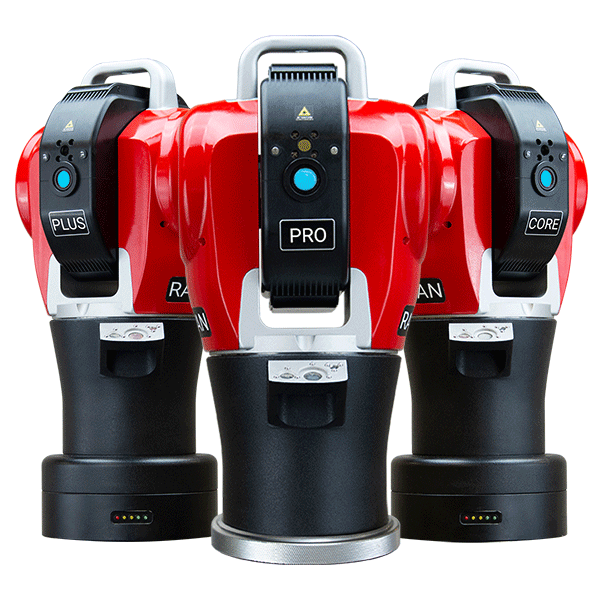
Figure 2: From left to right: Model: Radian Plus / Radian Pro / Radian Core / iLT
API Measurement Solutions
According to the customer's measurement requirements and in combination with the on-site environment, the API team used the Radian Pro laser tracker for this measurement.
The Radian Pro laser tracker is the flagship model in the API brand Radian series, integrating both IFM (Interferometric Laser) and ADM (Absolute Laser) dual lasers, with traceable measurement data, ensuring high-precision and high-standard measurements. The measurement rate of the Radian Pro laser tracker can reach 1000Hz, performing effortlessly in both static and dynamic modes, easily meeting detection needs. In addition, it has an extremely large measurement range, capable of high-precision measurements on workpieces or measurement targets within a range of 160 meters.
During measurement, the tracker emits a laser to the target sphere of the built-in prism and tracks it. Once the target sphere is fitted to the position to be measured, the tracker can collect spatial data at that target position either manually or automatically. After data collection, it will be synchronously transmitted to the measurement software on the laptop for subsequent analysis.
In the following text, we will explain in conjunction with the measurement content of this case.
On-site measurement implementation

Figure 3: On-site detection of flange rotation accuracy
1. Detection of the rotational accuracy of the base flange of the composite material laying system mold support mechanism
Position the Radian Pro laser tracker appropriately, fix the target sphere to the flange to be measured, and connect it to a laptop to begin measurement.
During measurement, the Radian Pro laser tracker emits a laser to lock onto the center of the target sphere. The flange to be measured is then moved along the set direction and rotation angle. Once it reaches the designated angle and stabilizes, the laser tracker automatically collects data at a speed of 1000 points per second for that position, sending the spatial coordinate data to the measurement software for later use. Once all data for the positions to be measured is collected, comprehensive analysis and evaluation of all measurement data can be performed in the software, achieving the goal of detecting the rotational accuracy of the flange. (Please refer to Figure 3 for illustration)

Figure 4: On-site detection of industrial robot repeatability accuracy
2. Detection of the repeatability accuracy of industrial robots
In operations focused solely on detecting the repeatability accuracy of industrial robots, a single target sphere can be fixed at the end of the robot to carry out the detection. (Please refer to Figure 4 for illustration)
During measurement, the robot moves within the workspace according to a predetermined program, while the laser tracker tracks the position of the target sphere, measuring the spatial coordinate data of each stop position, thereby evaluating the robot's repeatability accuracy.

Figure 5: API robot detection accessories
In addition to detecting single repeatability accuracy, API has developed a series of accessories for robot detection, such as: multi-target sphere fixtures (suitable for 6DoF pose detection), active targets (suitable for automated detection of repeatability accuracy), and STS six-dimensional sensors (suitable for automated detection of 6DoF poses); furthermore, API has independently developed RMS software for robot detection, which includes two major modules, RPM and DH, capable of achieving robot accuracy detection, path planning, and calibration respectively. (Please refer to Figure 5 for illustration)
Summary
Using the Radian Pro laser tracker from API, customers can quickly and efficiently achieve precision testing for aerospace composite laying systems, establishing reliable data support for the subsequent installation and debugging of their equipment.
Breakthrough limits, more choices
In addition to the Radian Pro model laser tracker used in this case, the API brand also offers different models of laser tracker products to meet the measurement needs of more fields and application scenarios.
Radian Plus and Radian Core provide high-precision measurements while achieving battery power and wireless data transmission, truly realizing completely wireless large-scale precision measurement.
The newly launched iLT laser tracker further reduces the overall size of the laser tracker by 50% (compared to the Radian series) while enabling completely wireless measurement, with a total weight of only 4.9 kg, maximizing portability and fully meeting the needs of applications in outdoor, field, confined spaces, and multi-machine integration environments.

Figure 6: Radian Plus laser tracker (left) and iLT laser tracker (right)

Figure 7: iLT laser tracker application site
Leading the future, more expansions
In addition, the API brand's 9D laser radar (9D LADAR) products can achieve non-contact measurement without cooperative targets based on micron-level high measurement accuracy. With the support of OFCI core measurement technology, the spatial coordinate data of the laser contact position can be fed back to the measurement software in real-time, with a data acquisition rate of up to 20 kHz, instantly achieving point cloud data collection that is precise, fast, and efficient.

Figure 8: 9D laser radar high-temperature casting measurement site
About A PI
The API brand was founded by Dr. Kam Lau in 1987 in Rockville, Maryland, USA. He is the inventor of the laser tracker and holds multiple patents in globally leading measurement technologies, making him a leader in the field of precision measurement technology. Since its establishment, API has been dedicated to the research and production of precision measuring instruments and high-performance sensors in the mechanical manufacturing sector. Its products are widely used in advanced manufacturing fields around the world and are at the forefront of high-precision standards in coordinate measurement and machine tool performance testing.
相关新闻:
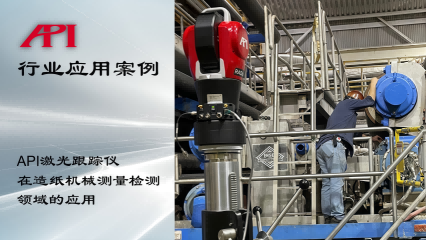
Application of API Laser Tracker in the Measurement and Detection Field of Papermaking Machinery
Detection Requirements of Papermaking Machinery In order to address issues such
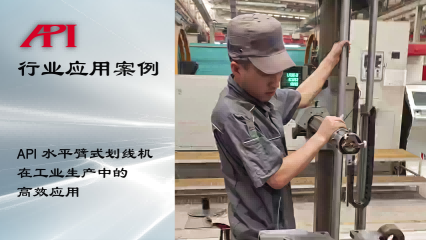
API Horizontal Arm Marking Machine Efficient Application in Industrial Production
About the Marking MachineThe marking machine is a measuring device commonly used
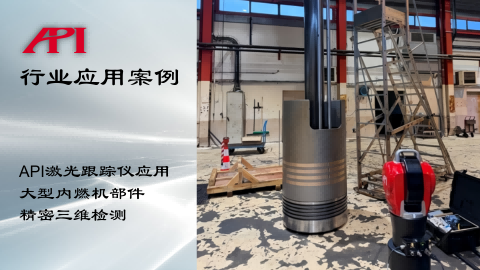
Precision 3D Inspection of Large Internal Combustion Engine Components
The Importance of 3D Inspection for Large Internal Combustion Engine ComponentsL
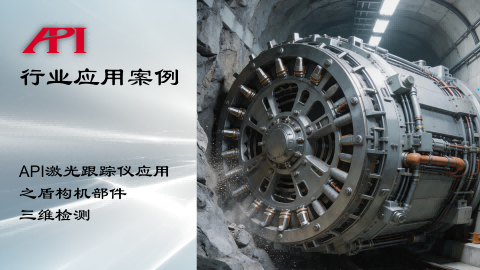
Application of API Laser Tracker in 3D Detection of Shield Machine Components
Importance of 3D Detection of Shield Machine ComponentsThe shield machine is the
Learn More:

激光跟踪仪靶球&测头
Maximize laser tracker productivity with hand held and 激光跟踪仪主动靶标.
Learn More /laser-tracker-targets
XD Laser CMM Calibration
The XD Laser is the only assessment system that can measure all 6 error parameters simultaneously in a single set-up
Learn More /xd-laser

API Reverse Engineering Service
Reverse engineering services include scan as-built parts to creation of a 3D digital point cloud and CAD Model.
Learn More /reverse-engineering/